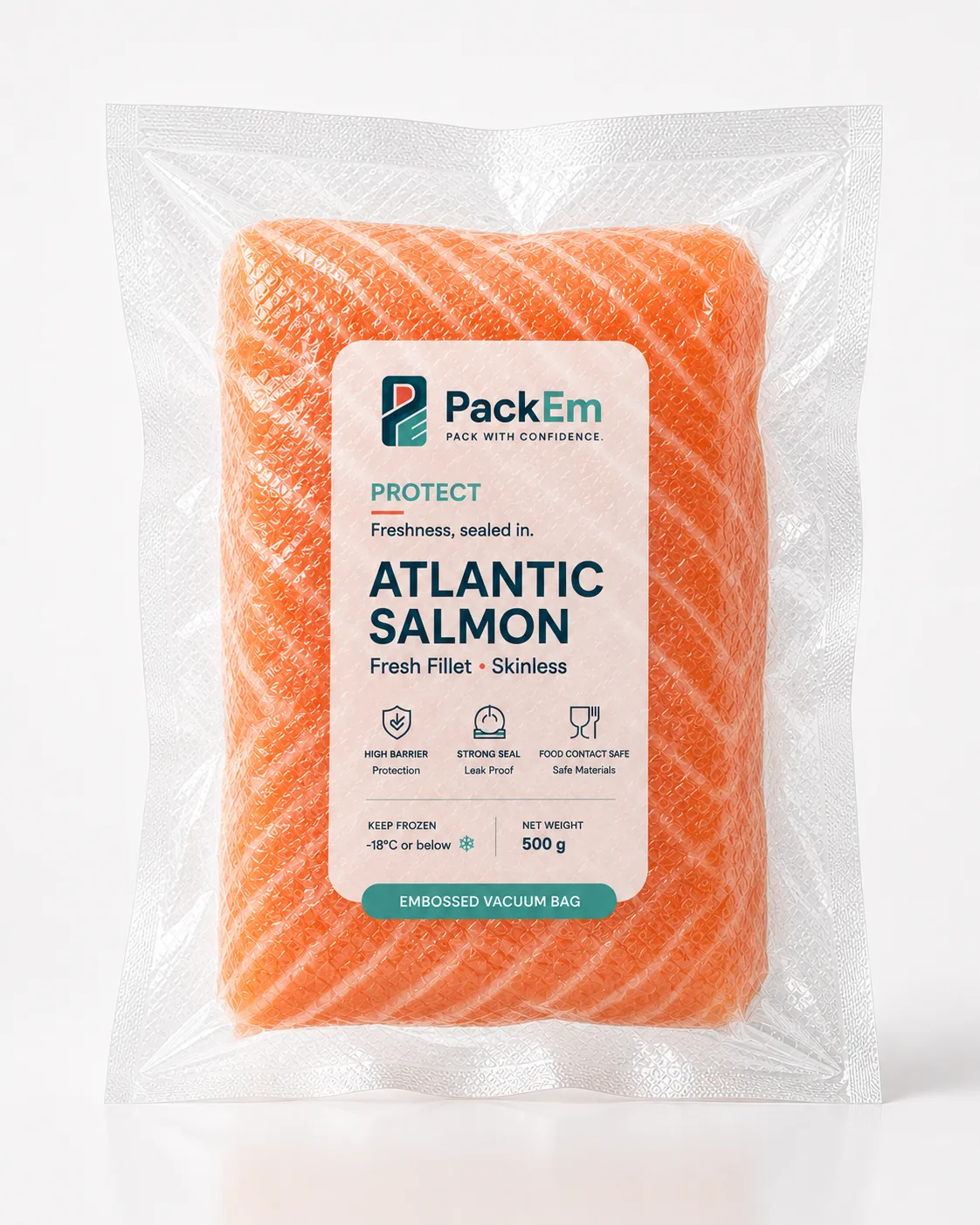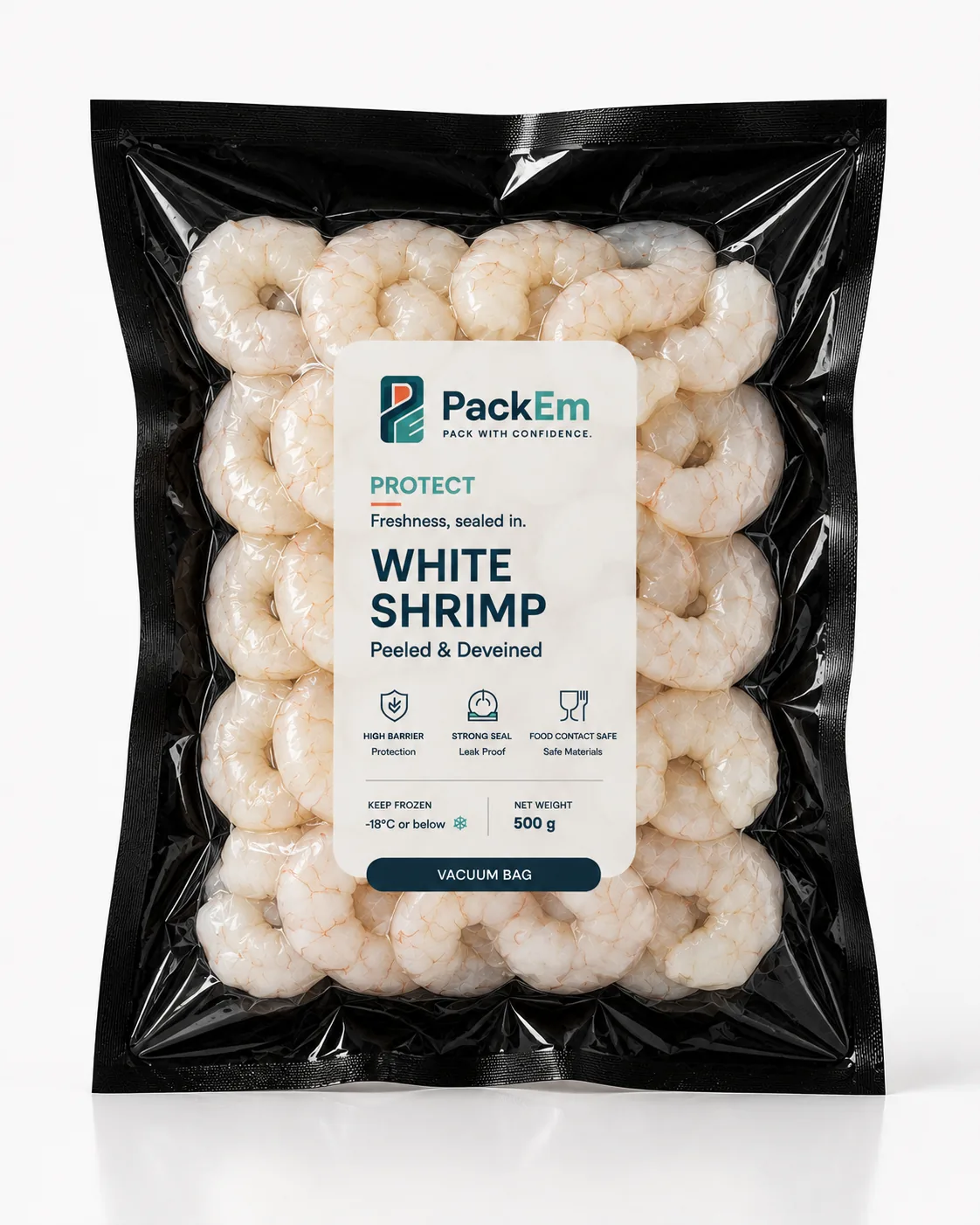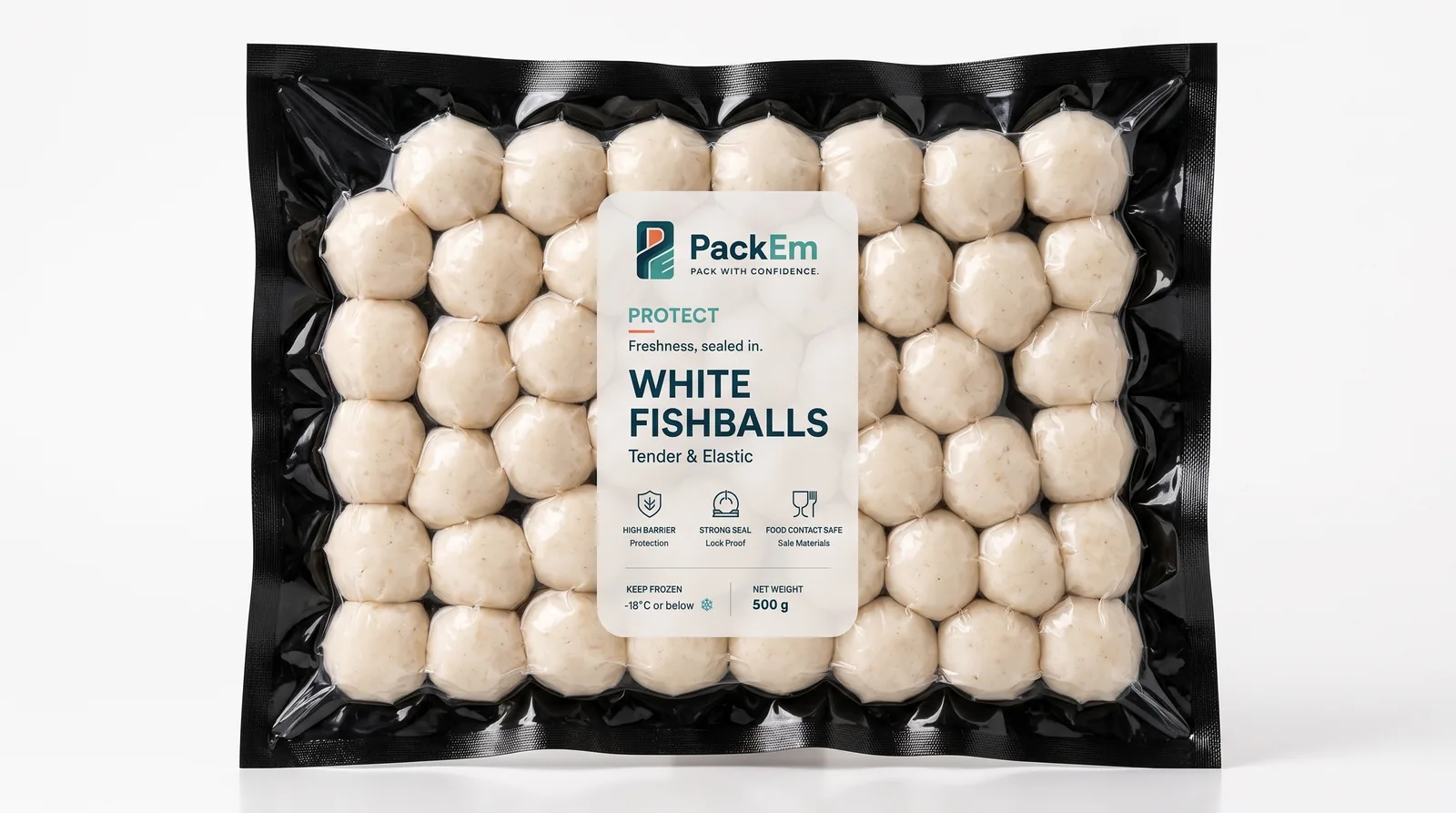

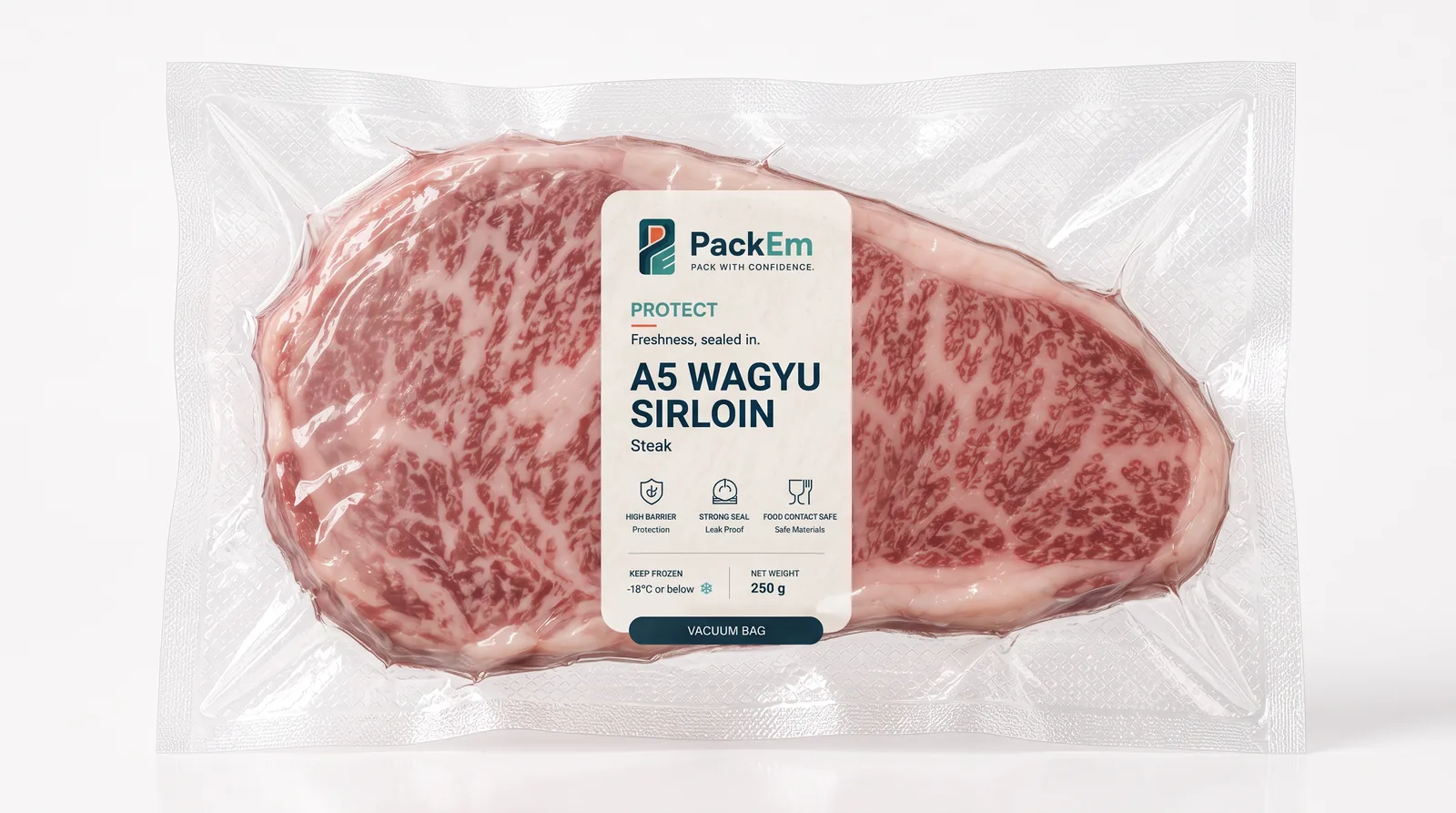
Vacuum bags and shrink bags look similar on the shelf and both remove air from around the product. They are not the same thing, and picking the wrong one can mean loose, cloudy packs or paying for a process you do not need.
How a vacuum bag works
A vacuum bag is a PA/PE pouch, sealed on three sides. You put the product in, a vacuum machine pulls the air out and seals the open end. The film pulls in around the product but it does not shrink, so there is usually loose film at the edges and around corners. Most vacuum bags are 70 to 200 μm.
How a shrink bag works
A shrink bag is made from a multilayer film that has been stretched during production. After vacuum sealing, the pack goes through hot water or a hot air tunnel for a few seconds. The film tries to return to its original size and tightens around the product like a second skin. Most shrink bags also carry an EVOH or PVDC layer for high oxygen barrier.
Appearance
Shrink bags win on looks. There are no loose ears or wrinkles, so the product shows clearly and labels sit flat. That matters for whole chickens, beef primals, cheese and salami sold in supermarkets. Vacuum bags look fine for portions, frozen seafood and products that go into a carton or a food service kitchen.
Shelf life
A tight shrink pack leaves no pockets where liquid or air can collect, and its barrier layer slows oxygen far more than a standard PA/PE bag. For chilled fresh meat this can add weeks. For frozen products, where cold already slows spoilage, a good vacuum bag is often enough.
Equipment and cost
Vacuum bags need only a vacuum machine. Shrink bags need a vacuum machine plus a shrink tank or tunnel, and the bags themselves cost more. If you pack a few hundred kilos a day of frozen product, vacuum bags usually make more sense. If you supply chilled meat or cheese to modern retail, the extra step often pays back in fewer returns and better shelf presence.
Common mistakes
The most frequent problem with shrink bags is water that is not hot enough, which leaves the pack cloudy and loose in places. The second is a bag that is far too big, which shrinks into thick folds that can crack in the freezer. With vacuum bags, the usual mistake is choosing a gauge that is too thin for bony or sharp products.
Both formats can be printed. On vacuum bags the print stays exactly as designed. On shrink bags the artwork is pre-distorted so it reads correctly after shrinking, which takes a little more setup but gives a very clean result.
A simple rule
Frozen, portioned or going into a carton: start with a vacuum bag. Chilled, sold whole or displayed in retail: look at a shrink bag. If you are between the two, PackEm can send samples of both in your size so you can compare them on your own product.