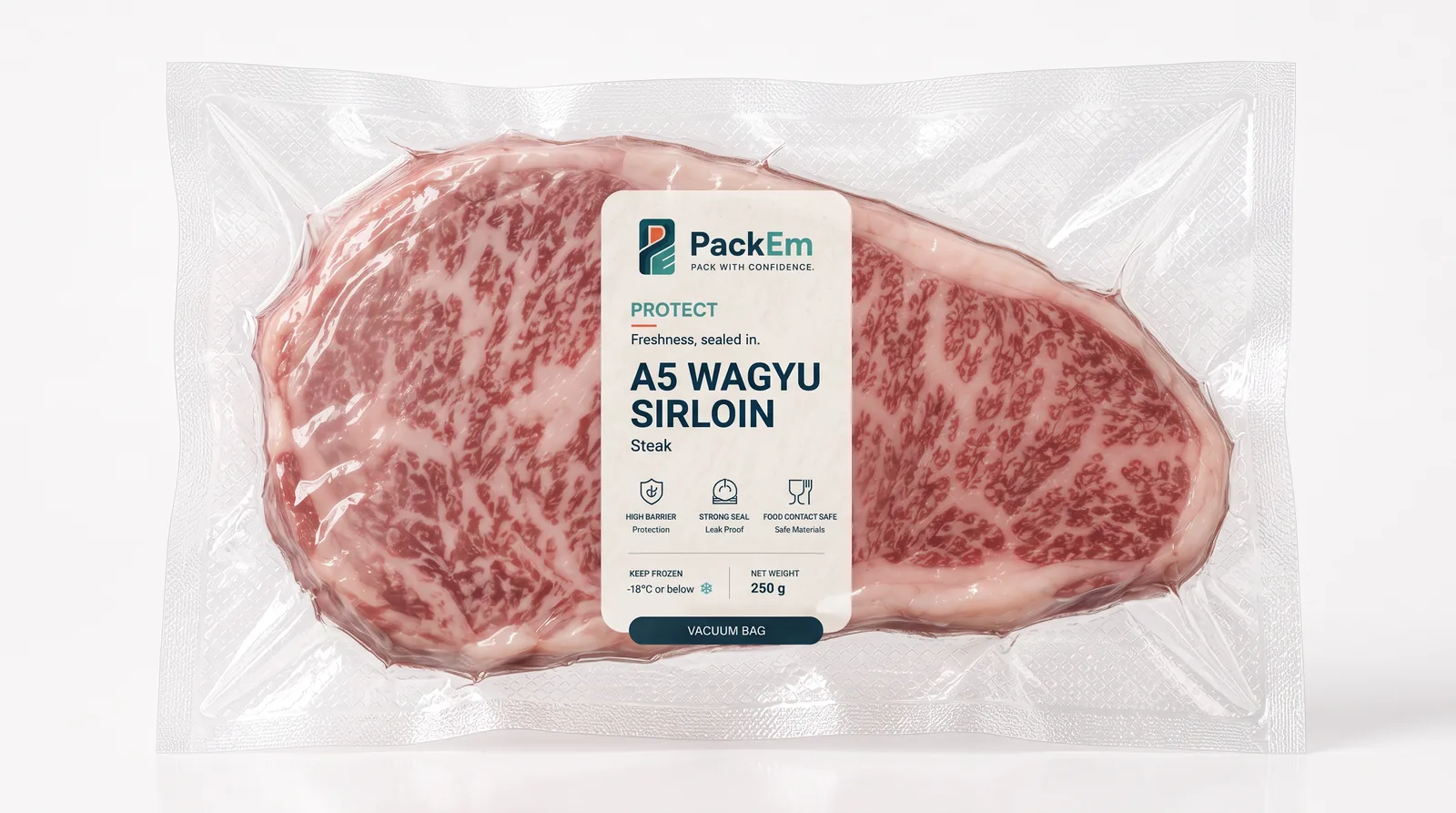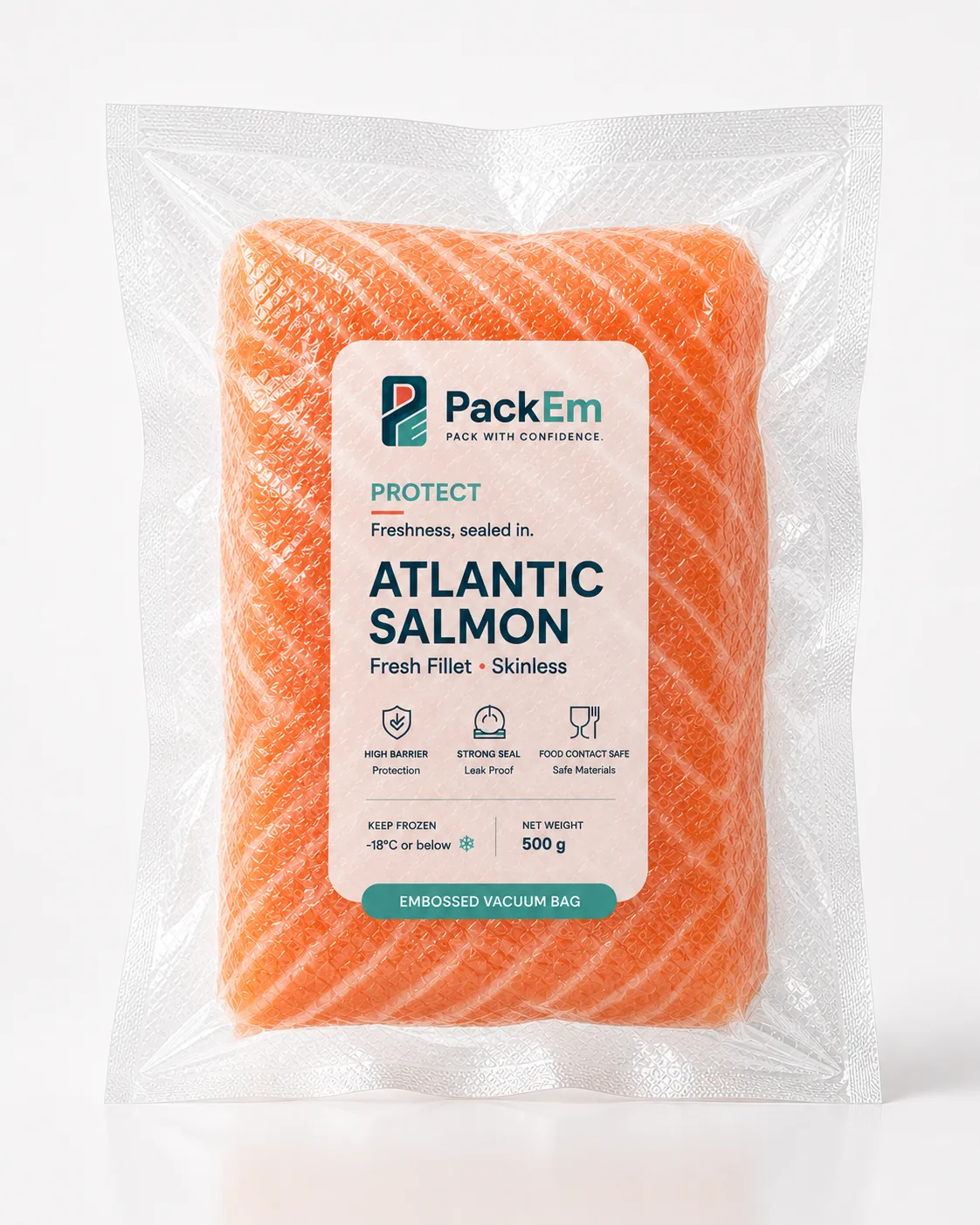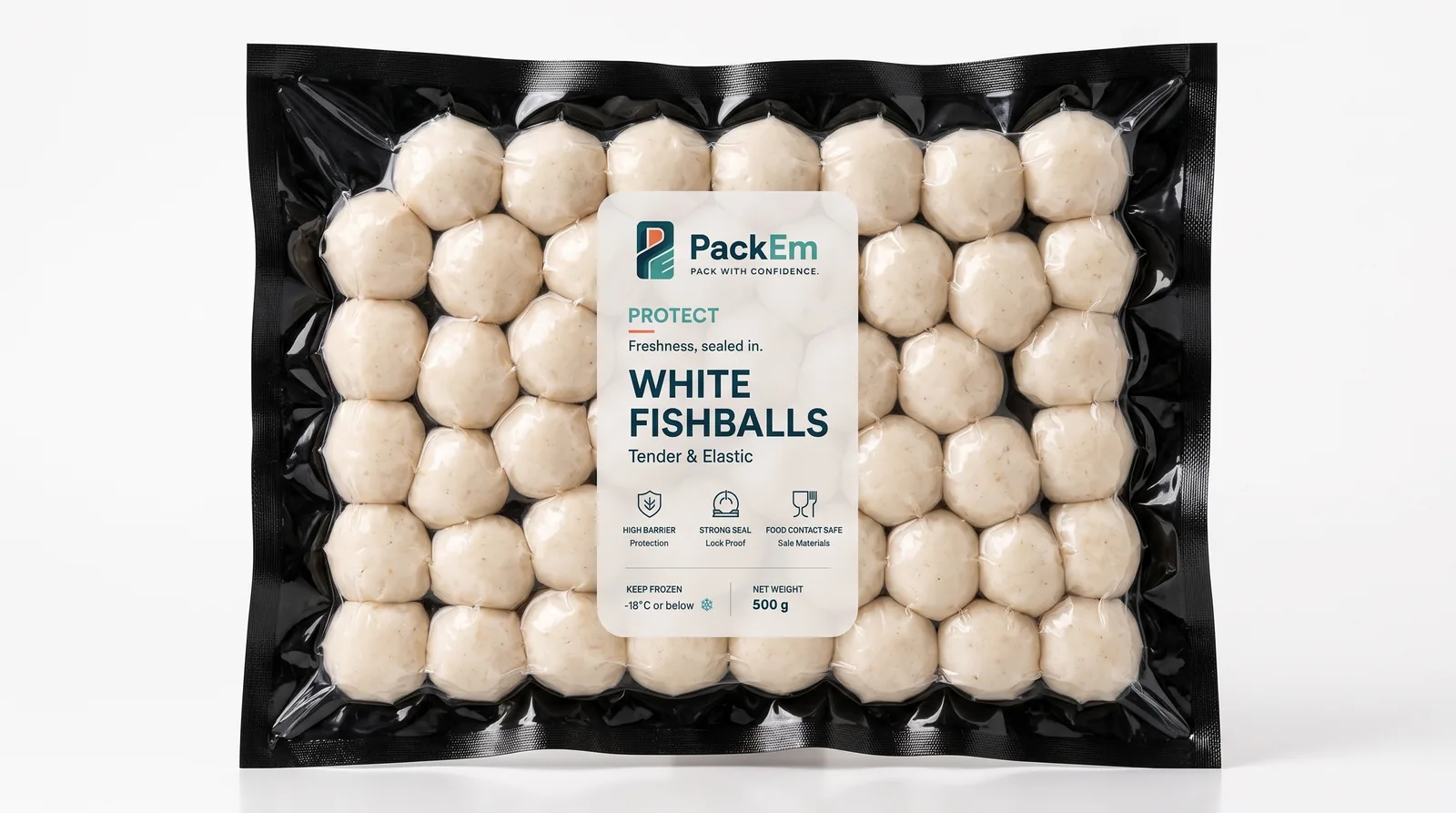

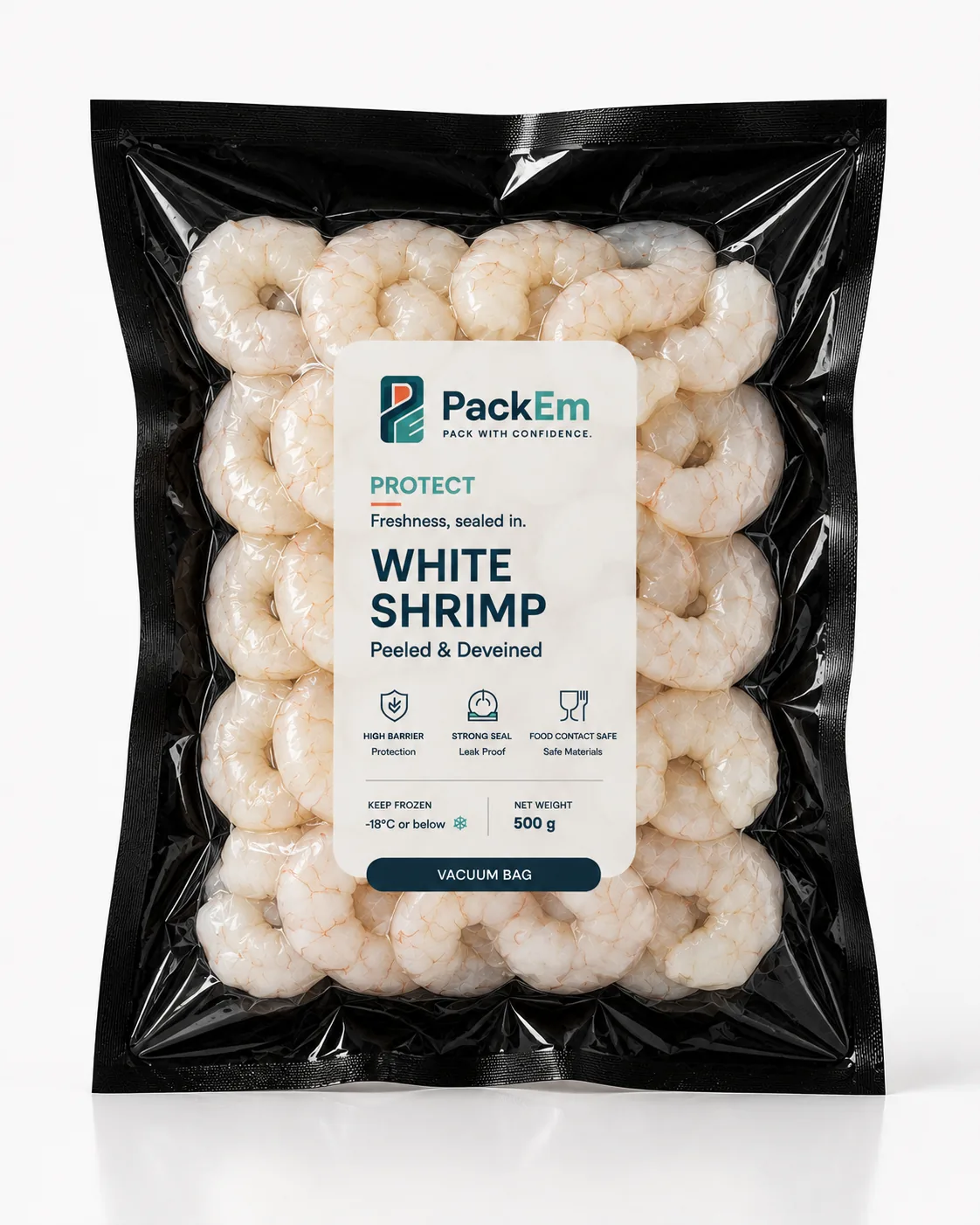
Frozen seafood is one of the hardest jobs a vacuum bag can do. The product is cold, hard and often sharp, the cartons are stacked high, and the packs may travel from a plant in East Java to buyers in Jakarta, Bali or overseas. Choosing the right gauge is the cheapest way to avoid punctures and frost burn.
Why seafood is hard on film
Shrimp have pointed tails and rostrums. Whole fish have fins and spines. Crab and lobster have shells. Even fillets freeze into blocks with sharp corners. At minus 18°C film becomes less flexible, and every bump in transit pushes those points into it. One pinhole lets air in, and the product next to it dries out and turns pale. That is frost burn.
Typical gauges
As a starting point: soft fillets, fish balls and peeled shrimp blocks often run well at 70 to 90 μm PA/PE. Head-on shrimp, whole fish and squid usually need 100 to 120 μm. Crab, lobster, bone-in portions and anything with spines may need 150 μm or more. Bigger packs and heavier fills need more gauge than small retail packs of the same product.
These are ranges, not rules. Your own line, glaze, carton design and transport route all change the answer.
Thicker is not always better
Going thicker raises cost per bag and makes the film stiffer, which can mean slower sealing and more wrinkles where it folds. Sometimes a better answer is a bag with more nylon in the right place, a softer PE sealing layer, or simply a bag that fits the product more closely so it does not move inside.
Other things that help
Glazing shrimp before packing softens sharp points. Placing shrimp in a tray or layering them flat reduces pressure points. Using a black and clear bag hides minor frost and protects colour from light. Good cartons that do not crush under stacking load prevent a lot of damage that gets blamed on the bag.
Remember that the gauge you need for a 5 kg export carton is not the gauge you need for a 250 g retail pack. Heavier packs press harder on every sharp point.
Clear or black and clear
Many seafood exporters use black and clear vacuum bags. The black back hides small amounts of ice and gives a strong contrast that makes shrimp and salmon look brighter. It also blocks light on one side, which helps protect colour under supermarket lighting. Clear bags show the whole product and are often preferred for food service and wholesale.
Smooth or embossed for seafood
Large plants usually run chamber or rollstock machines and use smooth bags or thermoforming film. Smaller processors and cold storage operators with nozzle sealers need embossed bags. The gauge advice above applies to both.
Test before you commit
The best way to choose is a small trial. Pack the same product in two gauges, freeze it, ship a few cartons the normal way, then open them and count leakers. PackEm can supply trial quantities in two or three gauges at your size so you decide on real numbers, not guesses.