
One of the most common questions we get is simple: can I use a cheaper PE bag instead of a PA/PE vacuum bag? Sometimes the answer is yes. Often it is no, and the reason is not obvious until a batch comes back with frost burn or leaks.
What PE does well
Polyethylene is the workhorse of flexible packaging. It is cheap, it seals easily at low temperatures, it stays flexible in the freezer and it is safe for food contact. LDPE and LLDPE give you clarity and stretch. HDPE gives you a thinner, stiffer film with a slightly papery feel. For bread, produce, ice, dry goods, liners and general handling, PE is the right choice and there is no reason to pay more.
Where PE falls short
PE has two weak points. The first is oxygen. Even at 100 μm, PE lets a lot of oxygen through, so a vacuum inside a PE bag slowly disappears and the product starts to oxidise. The second is puncture resistance. PE stretches, but sharp edges such as shrimp shells, fish fins, bone ends and frozen corners can push straight through it, especially when the bags rub together in a carton.
What nylon adds
A PA/PE bag is coextruded from layers of nylon and polyethylene. The nylon layer is tough and resists punctures and flex cracking. It also cuts oxygen transmission sharply compared with PE alone. The PE layer stays on the inside, where it does the sealing. The result is a bag that holds a vacuum for weeks or months and survives rough handling.
When to choose PA/PE
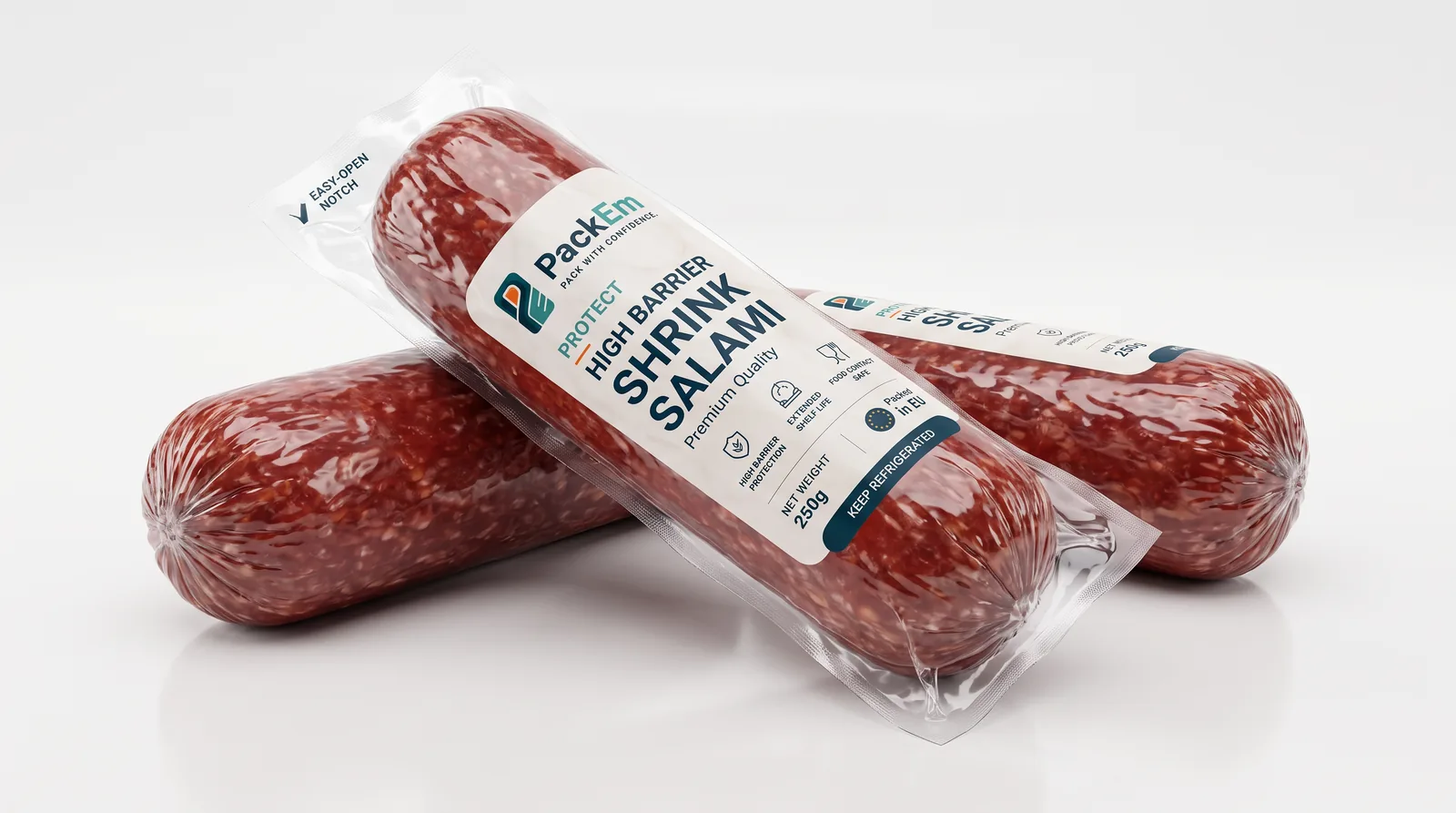
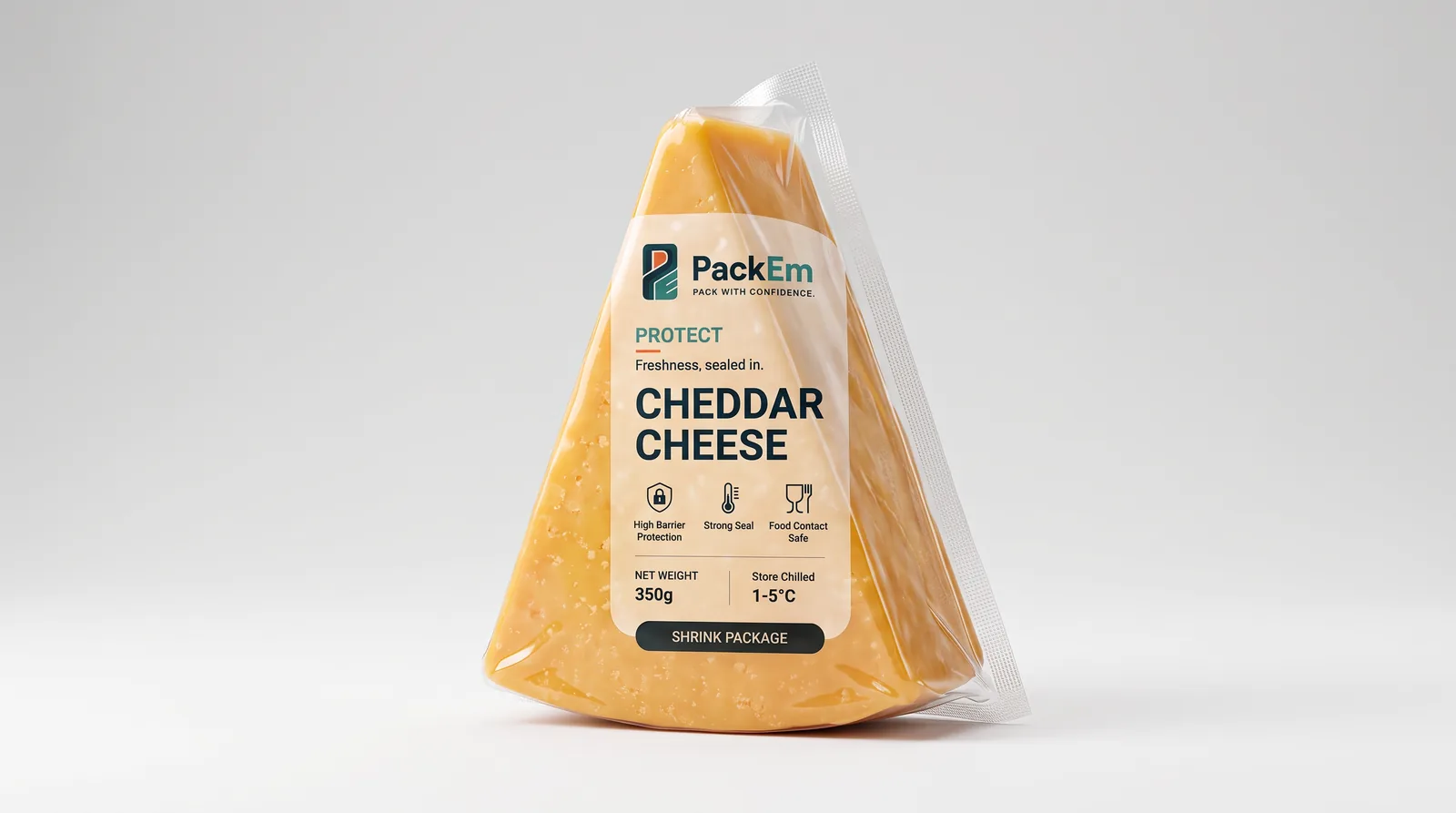
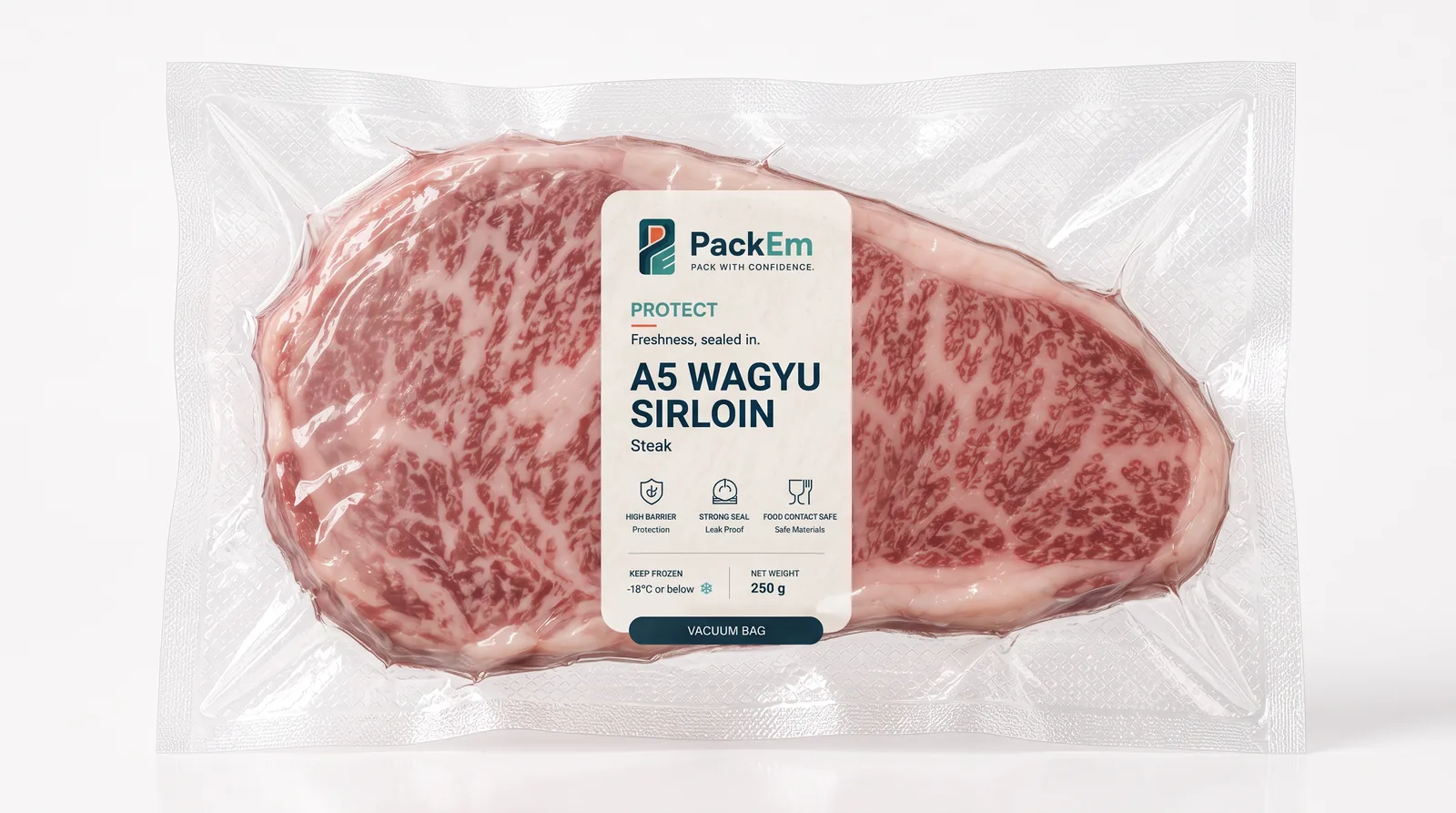
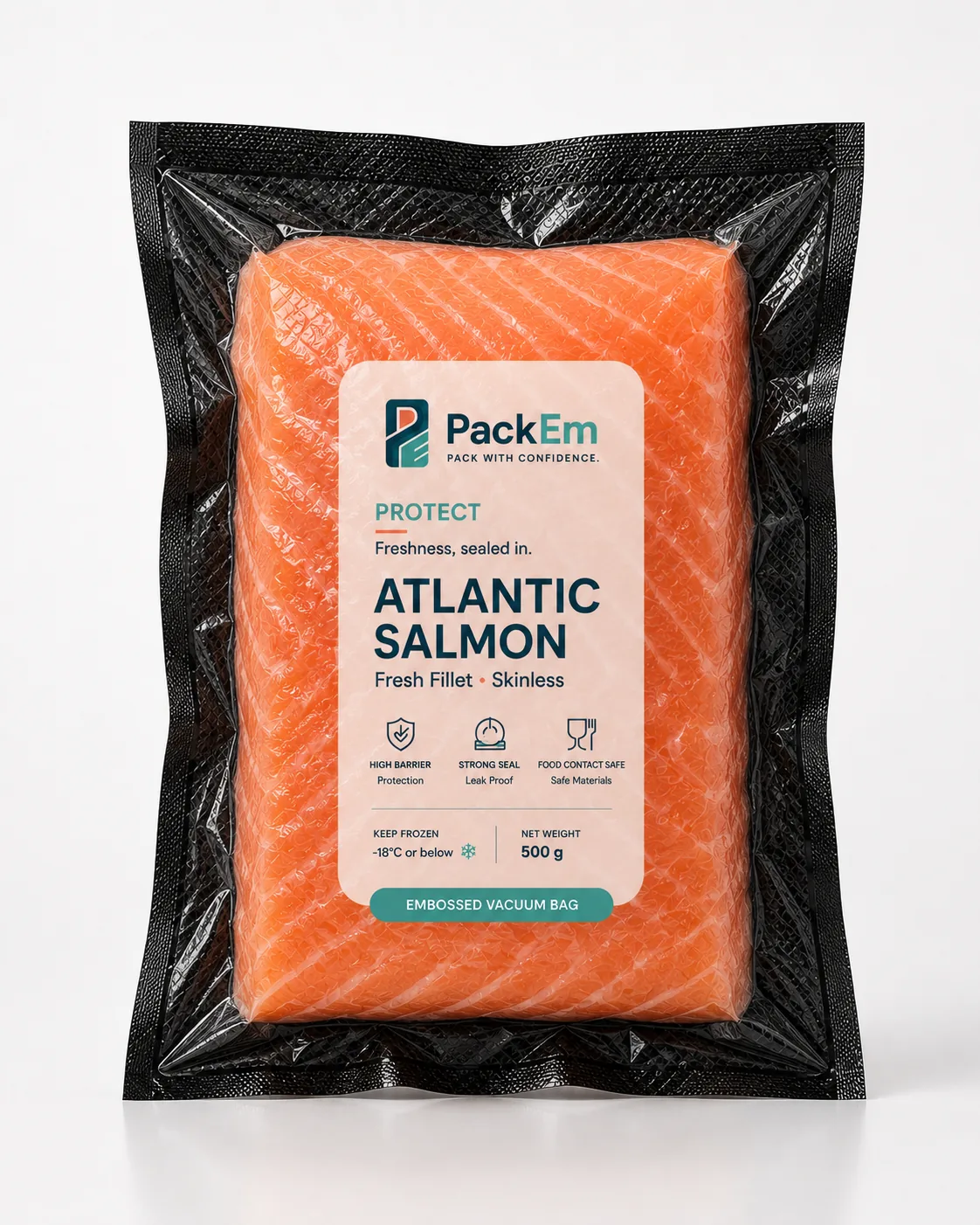
Choose PA/PE when you vacuum pack, when the product is frozen or chilled for more than a few days, when it has sharp or hard edges, or when it travels long distances. Frozen seafood, marinated chicken, beef cuts, sausages, cheese blocks and spare parts that must stay dry are all typical PA/PE jobs.
When PE is enough
Stay with PE when there is no vacuum, when the product is dry and soft, when it sells within days, or when the bag is an outer layer inside a carton. Ice bags, bread bags, produce bags, garment covers, carton liners, mattress covers and general purpose bags are all PE jobs.
Clear, black or printed
PA/PE bags can be clear, black and clear, or printed. Clear shows the product. Black and clear blocks light on one side and hides minor frost. Printing adds your brand but needs a minimum order.
A quick cost check
A PA/PE bag costs more per piece than a PE bag of the same size. Before you decide, compare that difference with what one failed carton costs you: the product, the freight, the customer complaint. For most frozen and chilled protein, nylon pays for itself the first time it prevents a return.
If you are not sure, send us the product and how you pack it. We can supply samples of both so you can see the difference on your own line.