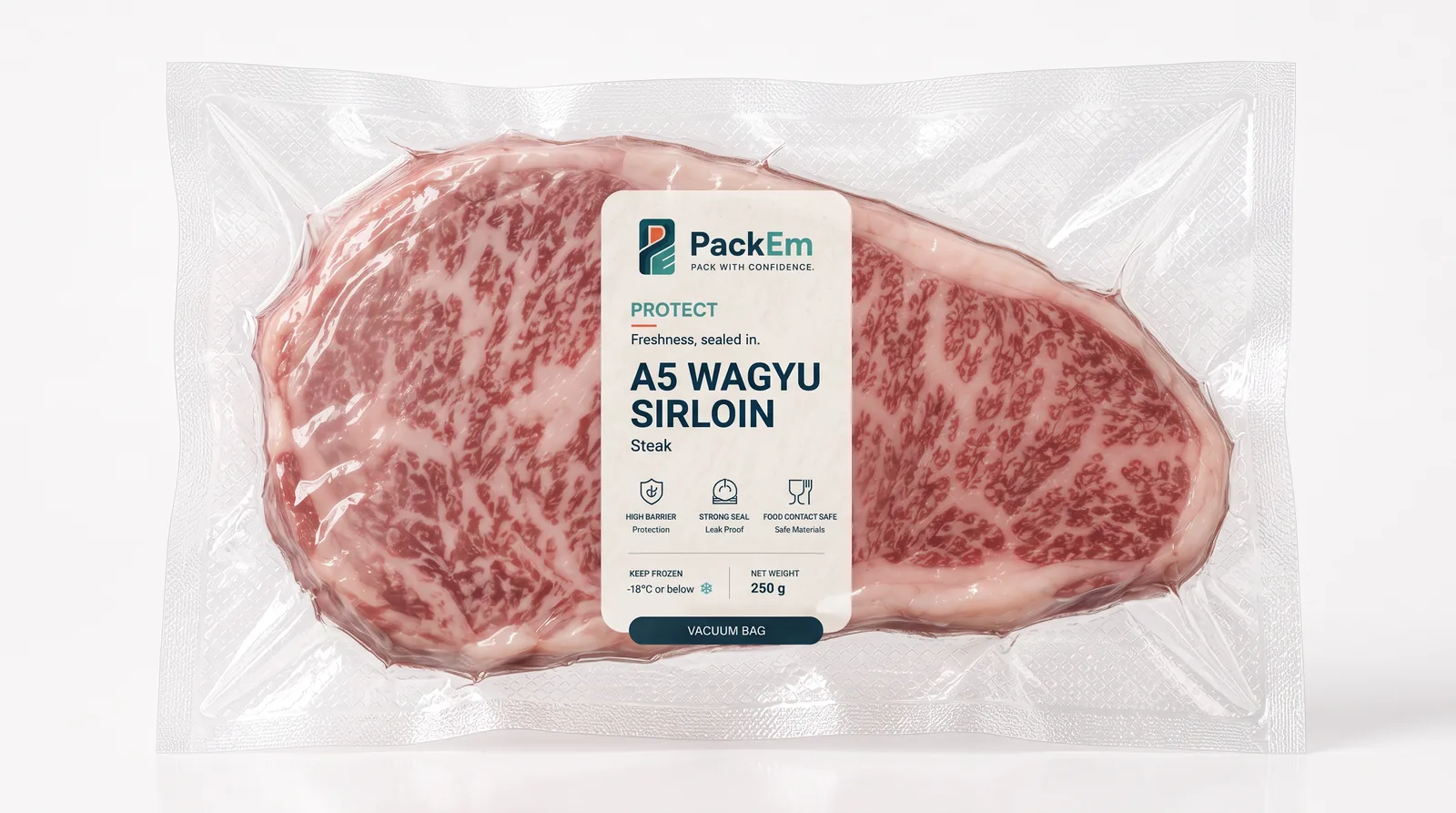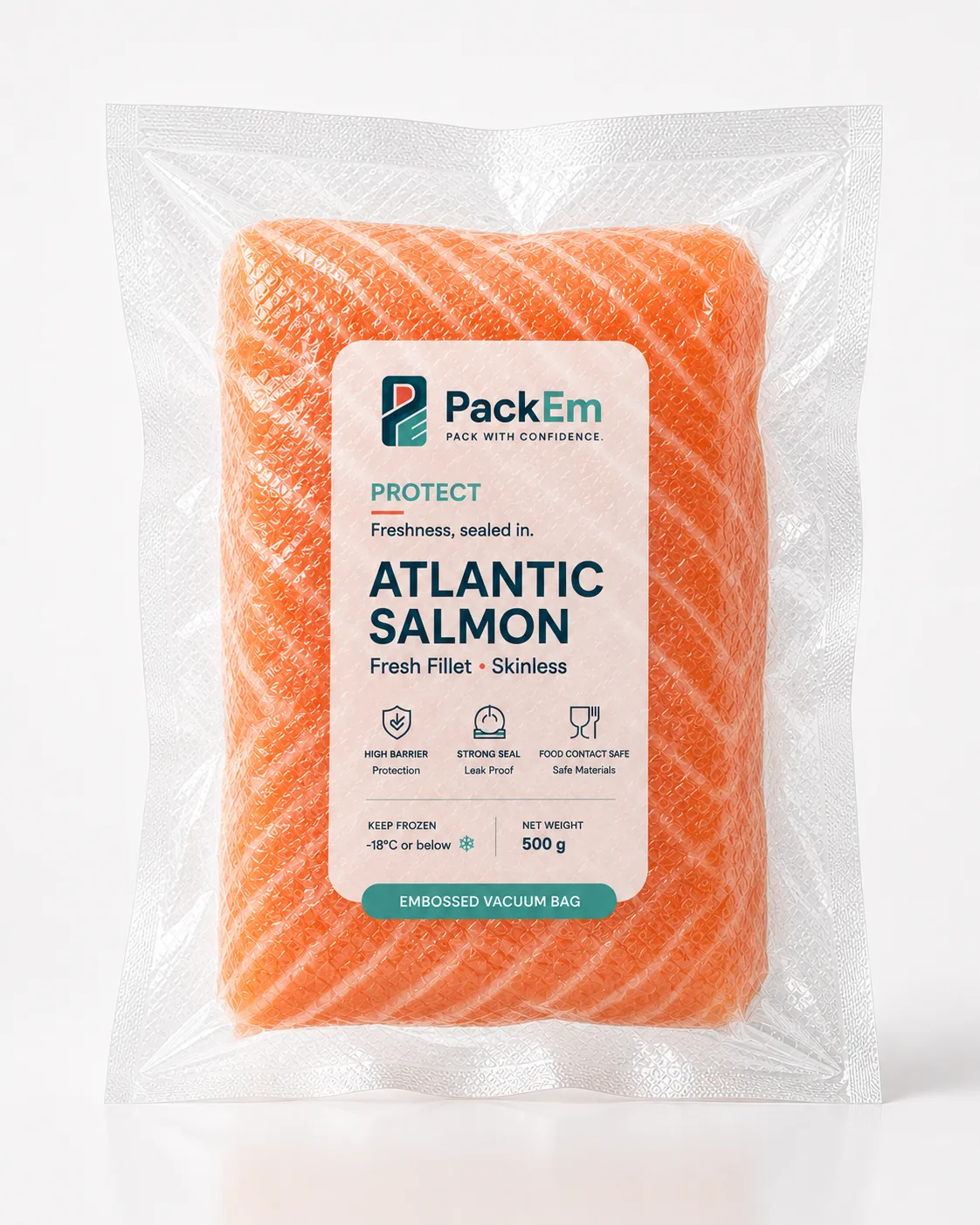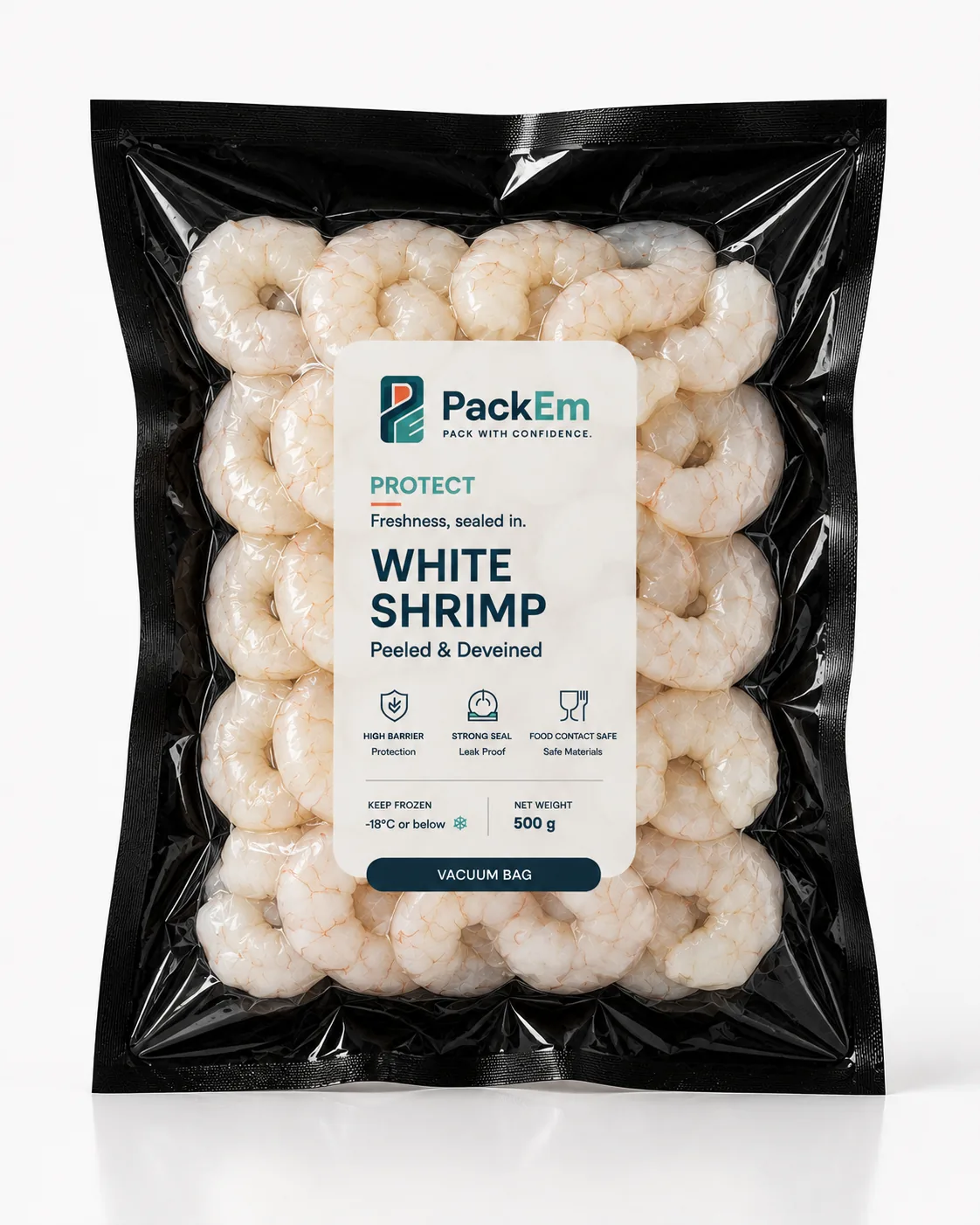

Thermoforming and skin packaging both run on rollstock machines and both use a formed base with a film on top. From a distance they can look alike. In practice they suit different products, and the right choice depends on how you want the pack to look, how long it needs to last and how fast your line runs.
How thermoforming works
A thermoforming machine takes a base web from a roll, heats it and forms it into cavities. The product is loaded into each cavity, then a lidding film is sealed across the top. The pack can be vacuumed, flushed with a gas mix, or simply sealed. The base can be flexible, giving a soft pouch like a vacuum pack, or semi-rigid, giving a tray shape that stands on the shelf.
Base webs are usually PA/PE from about 100 to 300 μm. Lidding films are often PET/PE or PA/PE from 50 to 100 μm, and can be printed or made peelable.
How skin packaging works
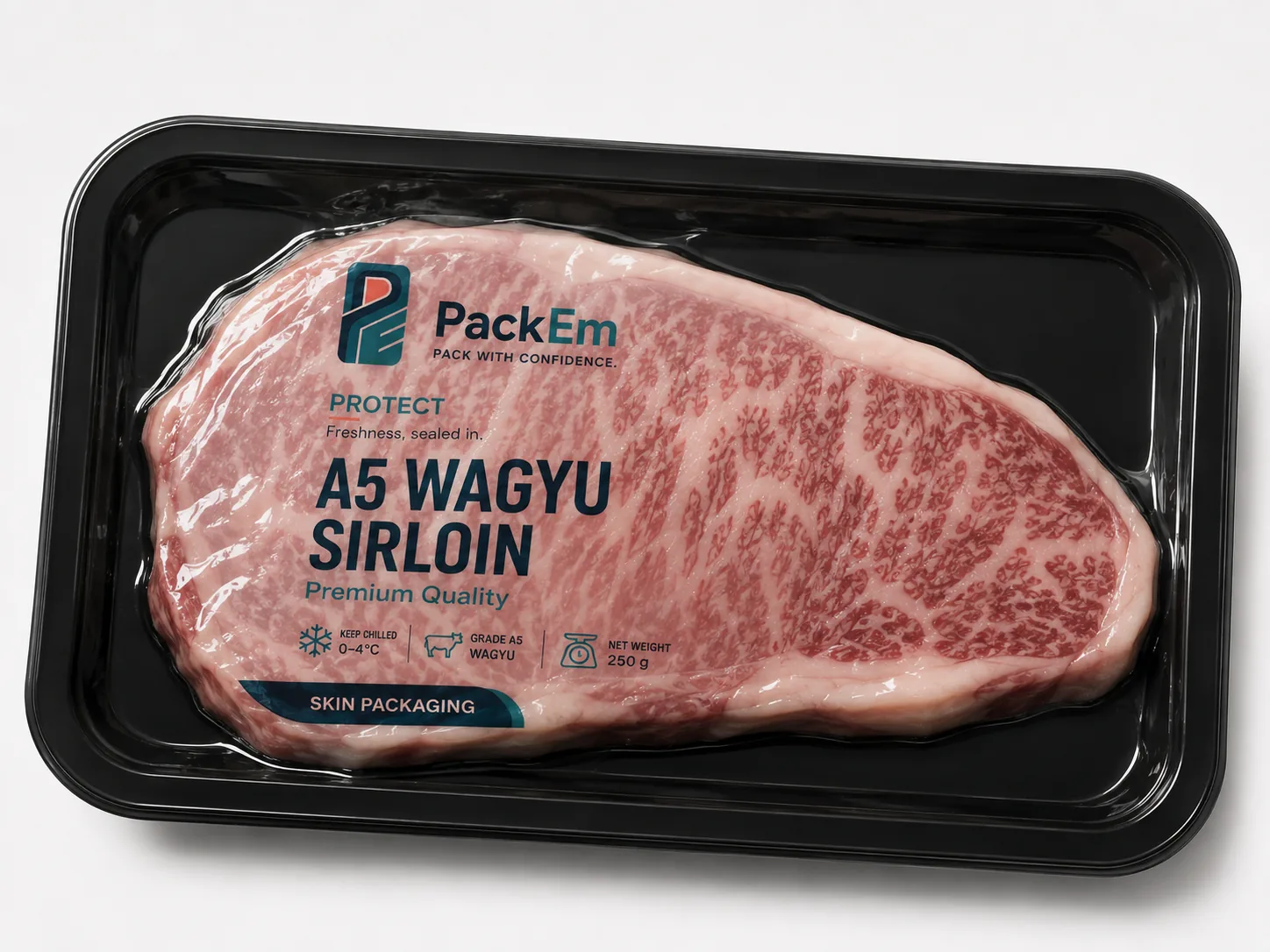
Skin packaging uses a special top film that is heated until soft, then drawn down over the product under vacuum. It wraps the product tightly and seals to the base everywhere the product is not. The result looks like the product has been laminated onto the tray. Nothing moves, there is no headspace, and the product can be displayed standing up or hanging.
Appearance on the shelf
Skin packs look premium. Steaks, wagyu, fish fillets and sliced cheese sit flat and clear, with every bit of marbling visible. Thermoformed packs look tidy and uniform, and they are ideal for sausages, sliced ham, nuggets and portioned products where speed and consistency matter more than a showcase look.
Shelf life and drip
Because skin film holds the product tight, juices stay in the meat instead of collecting in the tray. With a barrier base and top, skin packs often give long chilled shelf life for fresh red meat and fish. Vacuum thermoformed packs perform well too. Gas flushed packs keep red meat bright red but usually for a shorter time.
Line speed and cost
Thermoforming is generally faster and the films cost less per pack. Skin film is a specialist material and the cycle is slower. If you pack thousands of units a shift of a standard item, thermoforming usually wins on cost. If you sell a premium cut where looks drive the price, skin packaging often earns back its extra cost.
Changing over
Many rollstock machines can run both formats with a change of tooling and film. If you are unsure, start with thermoforming and add skin packs for a premium line later.
Choosing for your product
Ask three questions. Does the product need to be seen in detail? Does it need to stand or hang on display? How many packs per hour do you need? PackEm supplies forming webs, lidding films and skin films matched to common rollstock machines. Tell us your machine model and product, and we will propose a film set and send rolls for a trial.