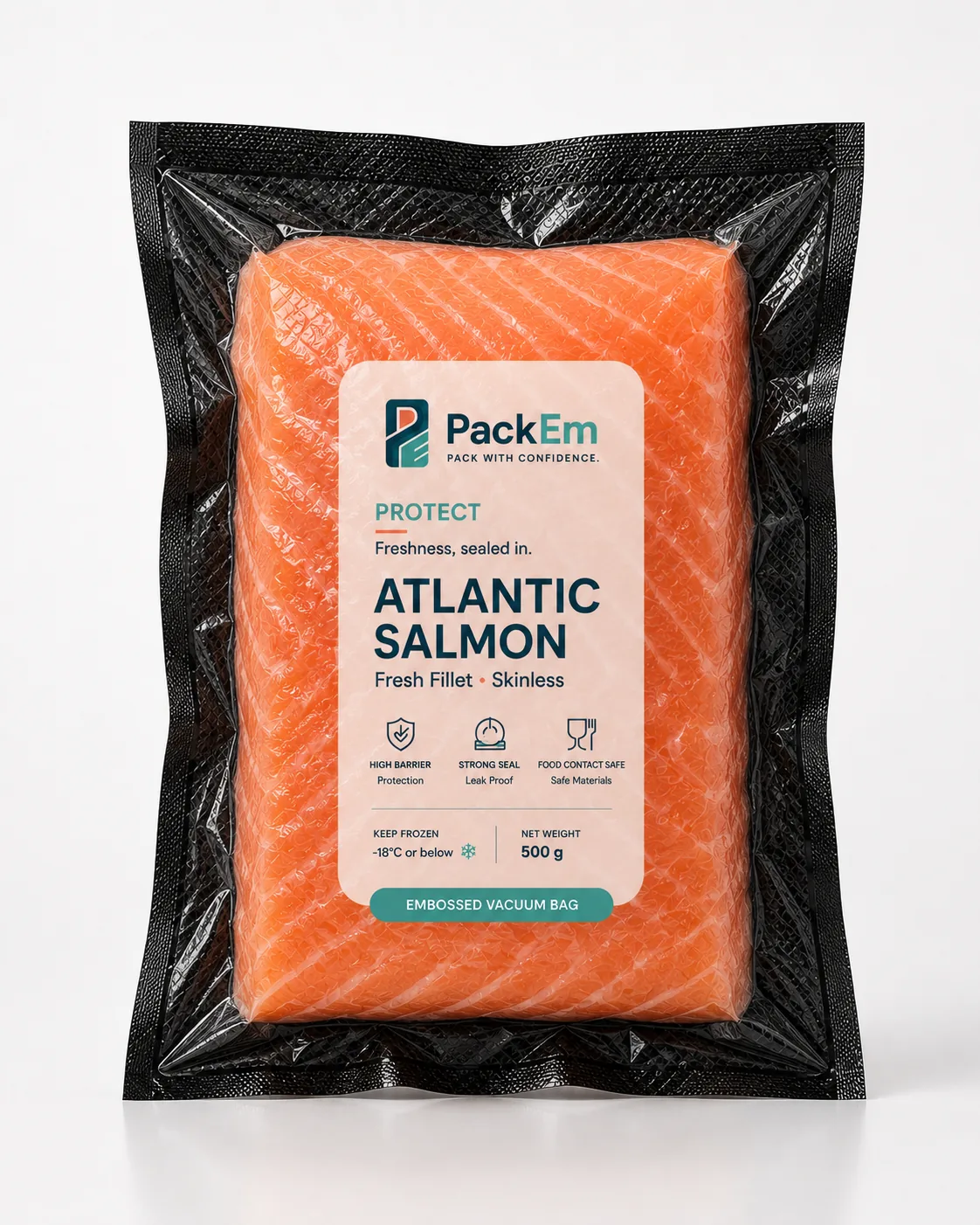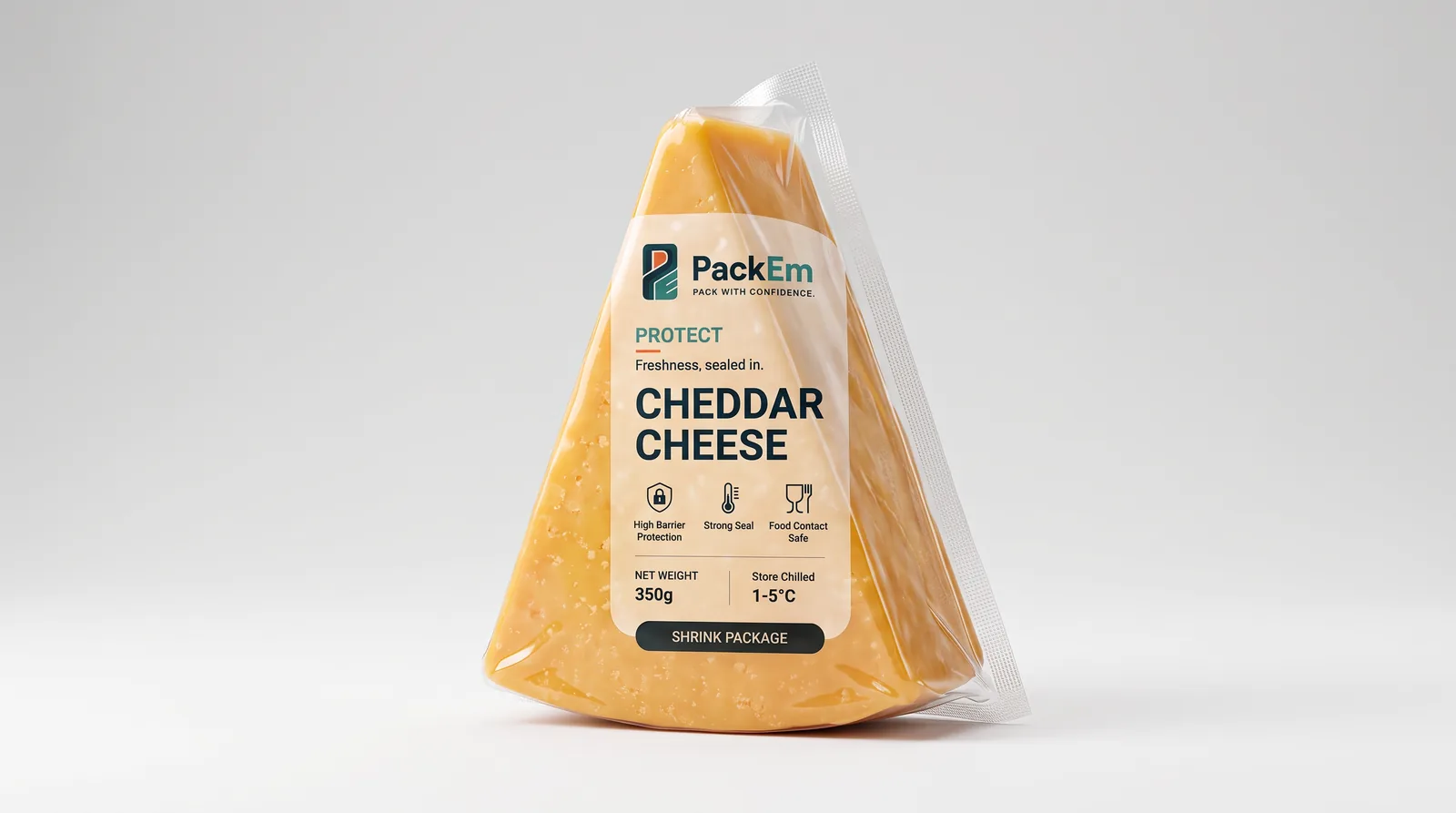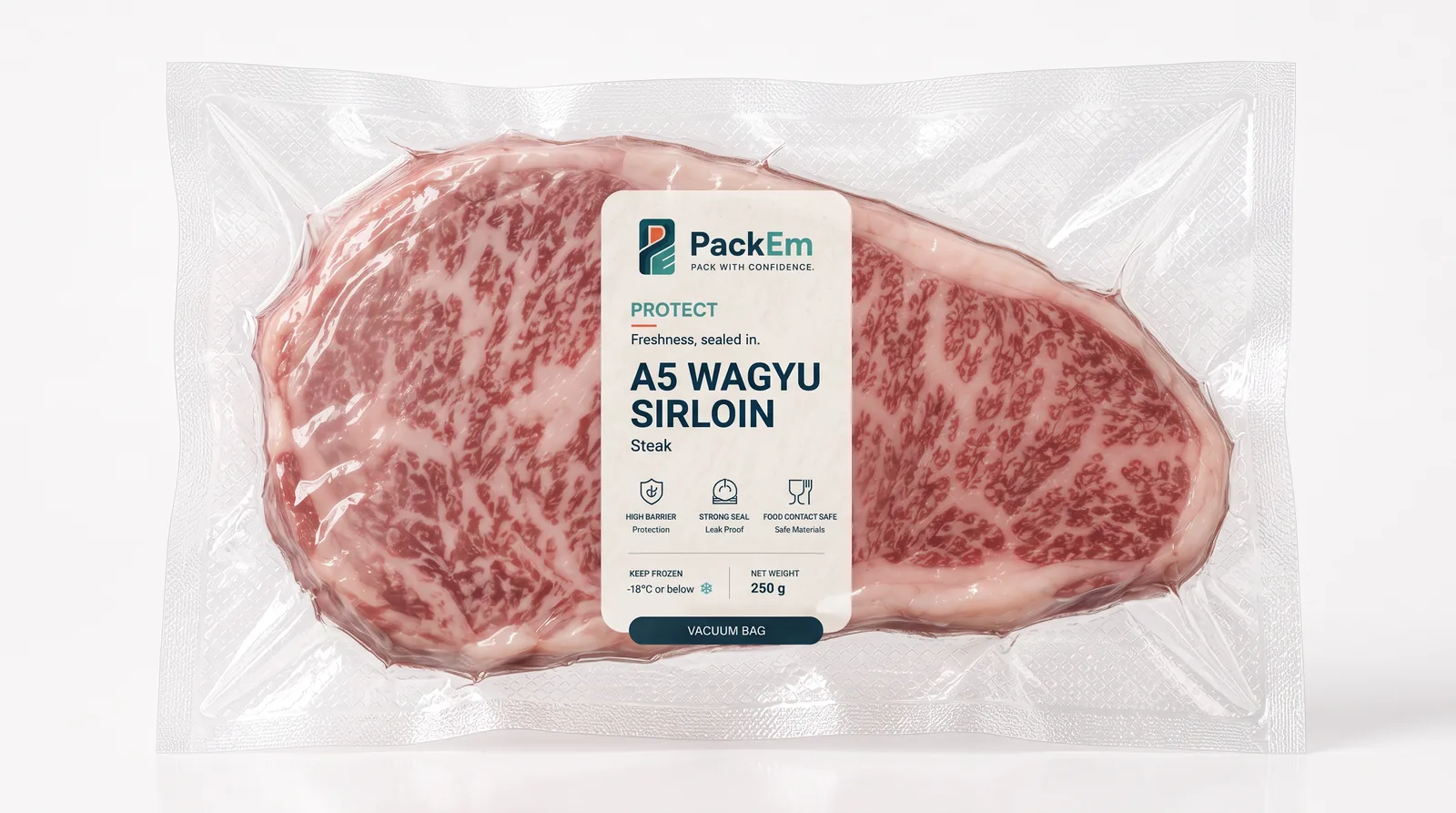

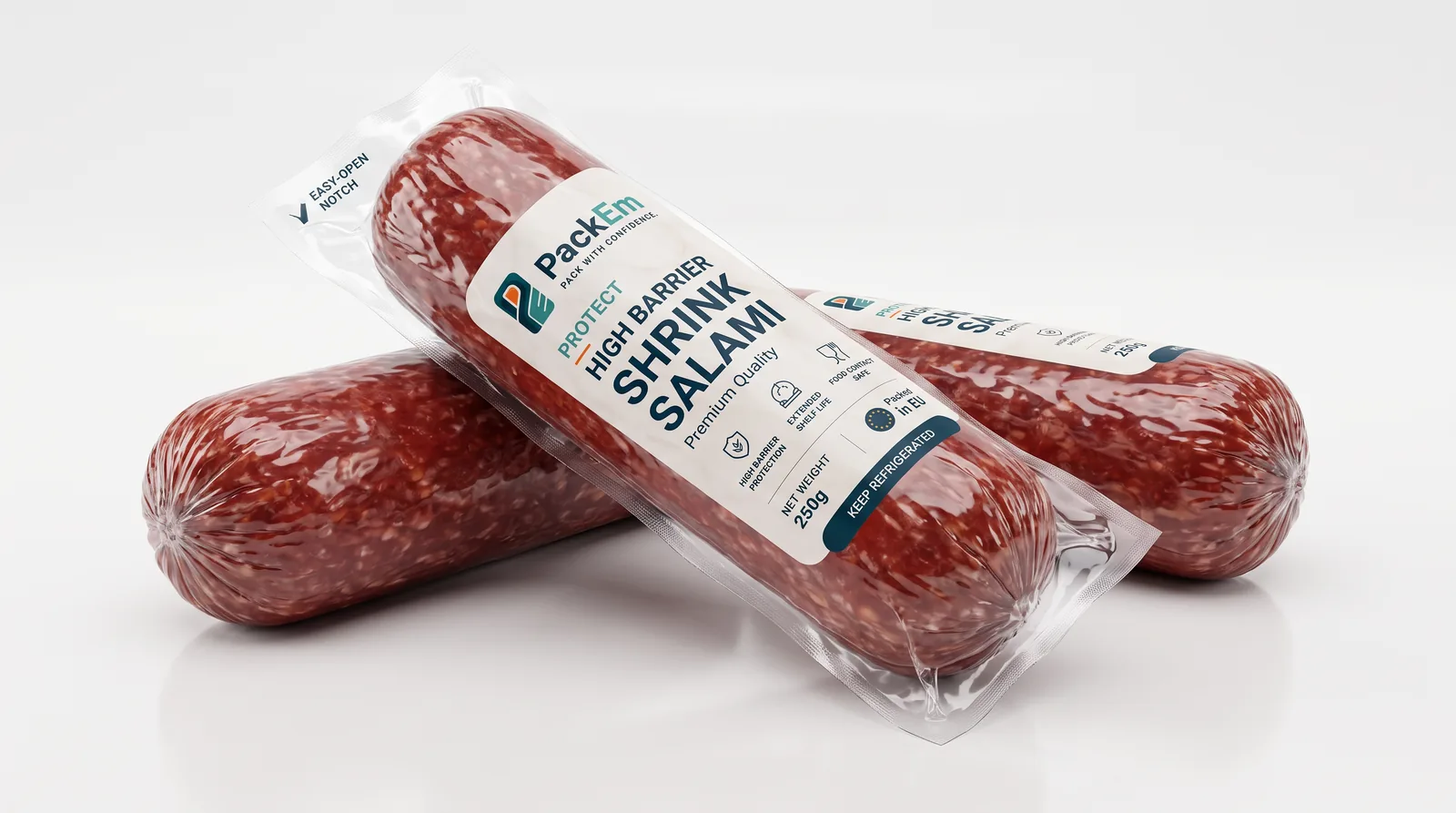
Ask ten food producers what decides their shelf life and most will say temperature. They are right, but there is a second number that matters almost as much, and it is printed on every good film spec sheet. It is called OTR, the oxygen transmission rate.
What OTR measures
OTR tells you how much oxygen passes through one square metre of film in 24 hours. It is written as cc/m²/day, sometimes cm³/m²/24h. A film with an OTR of 50 lets roughly 50 cubic centimetres of oxygen through each square metre every day. A film with an OTR of 5 lets through ten times less.
The number is measured in a lab at a fixed temperature and humidity, usually 23°C and either 0% or 50% relative humidity. That detail matters. Some barrier materials perform very differently when they get damp, so two values are only comparable if the test conditions match.
Why oxygen is the problem
Oxygen does three kinds of damage to food. It feeds aerobic bacteria and moulds, which spoil chilled meat, fish and cheese. It reacts with fats and oils, which is why nuts, fried snacks and coffee go rancid or stale. And it changes colour. Red meat turns brown, cured meats fade and bright sauces darken.
Vacuum packing and gas flushing remove most of the oxygen at the moment of sealing. OTR decides how quickly it comes back. A perfect vacuum in a leaky film only buys you a few days.
Typical ranges by material
Plain PE film has a high OTR, often several thousand at common gauges. That is fine for bread bags, produce and anything sold within days. Nylon (PA) is far better, so a PA/PE vacuum bag typically sits somewhere around 30 to 60 depending on thickness. Add an EVOH or PVDC layer and the figure can drop below 10, sometimes close to 1. Aluminium foil, when it is not creased or pinholed, is close to zero.
These are rough guides, not guarantees. Gauge, layer thickness, temperature and humidity all move the number. Always ask for the value on the actual structure you will buy.
How much barrier do you need?
Start with the product and the target shelf life, not with the film. Fresh chicken sold within a week in a chilled display does well in a standard PA/PE bag. Cheese that needs eight weeks, or processed meat sent to Sumatra and Bali, usually needs an EVOH shrink bag. Roasted coffee that should stay fresh for six months needs foil or a metallized laminate plus a valve.
Paying for more barrier than you need adds cost to every pack. Paying for less shows up as returns. The right answer sits in between, and it is usually found by testing two options side by side.
What to ask your supplier
Ask for the OTR value together with its test temperature and humidity. Ask whether it was measured on the finished bag or on the base film. Tell them your current shelf life in days and the number you want to reach. At PackEm we use those two numbers to pick a structure, then send samples so you can run your own trial before ordering in volume.