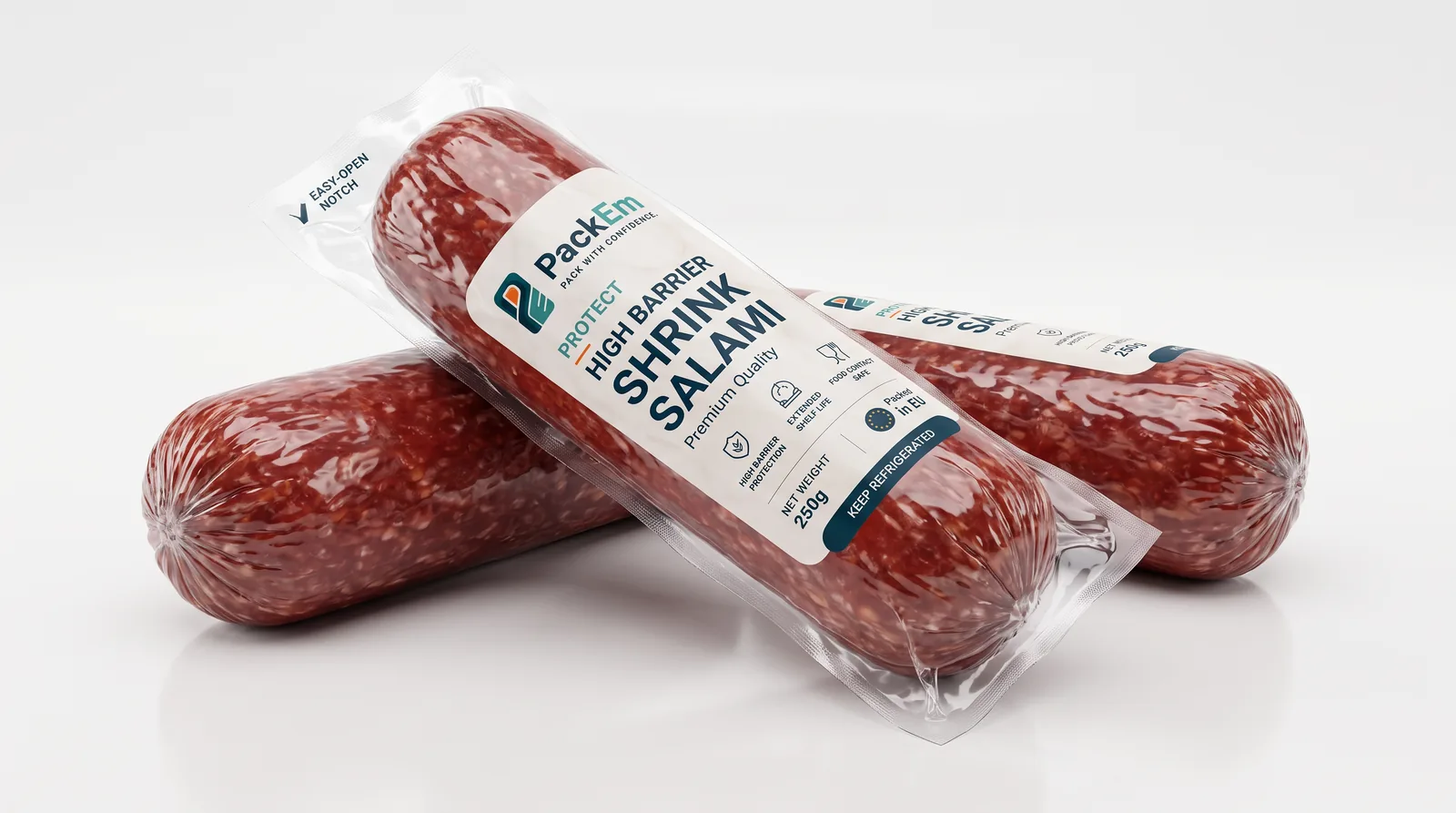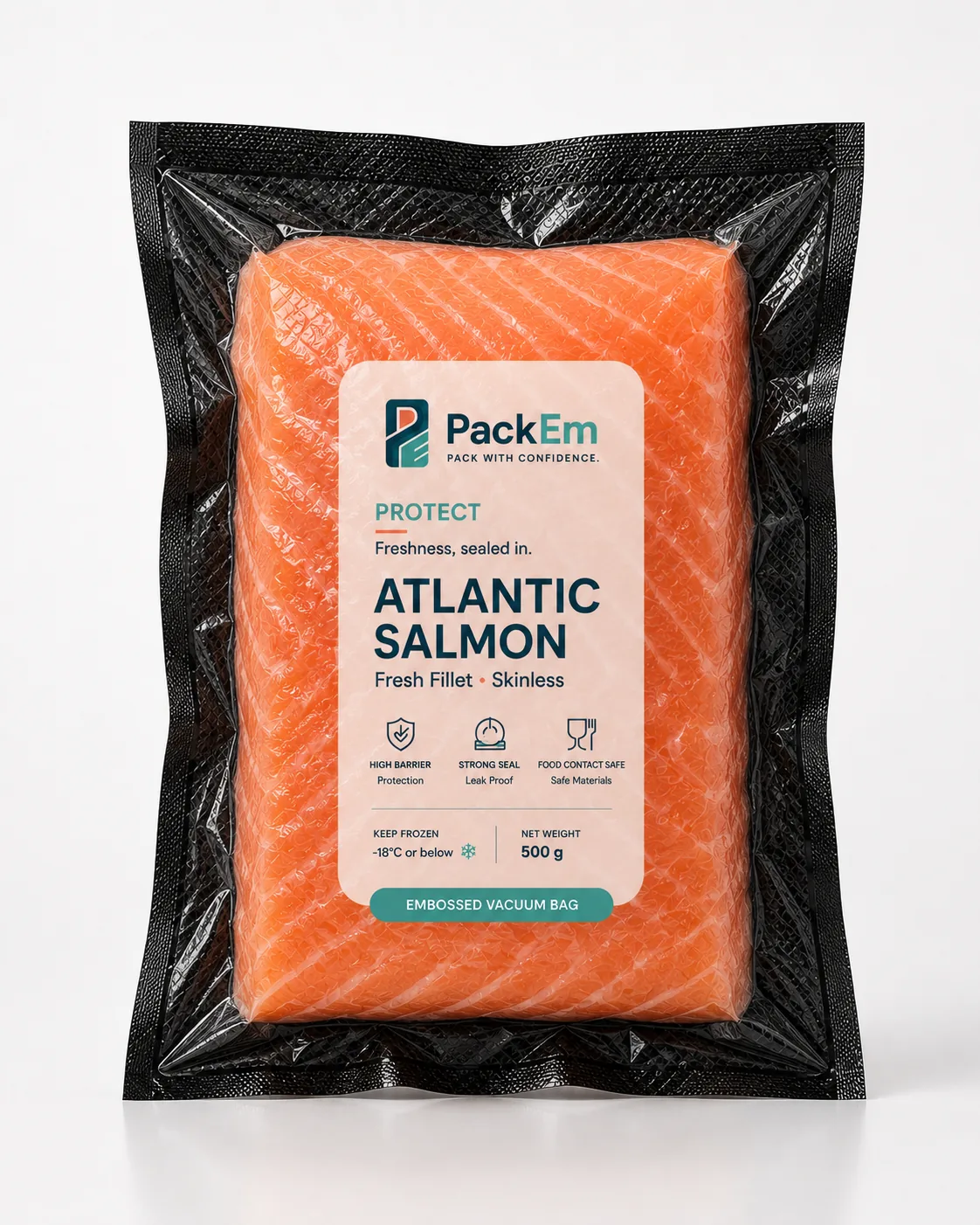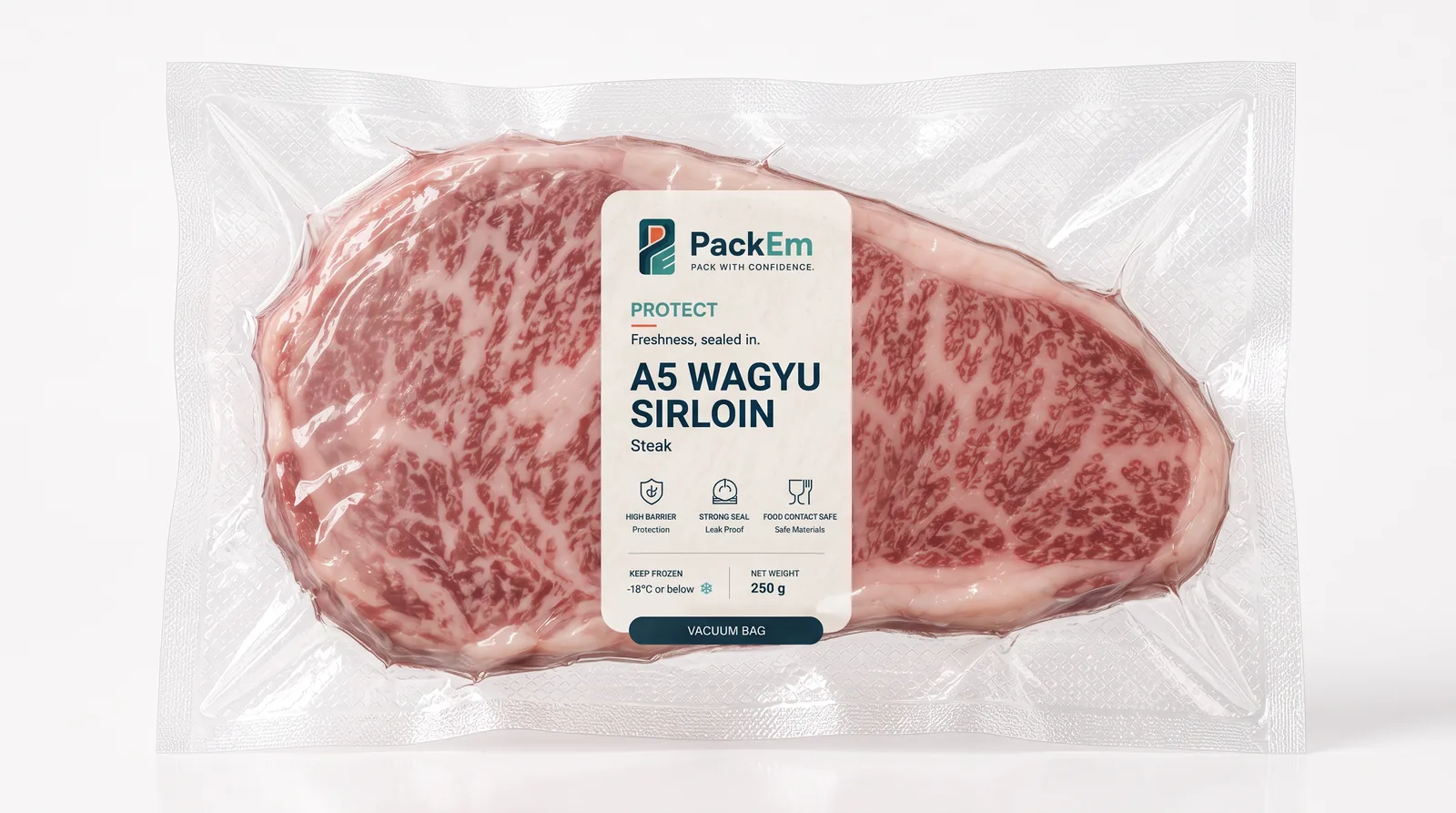

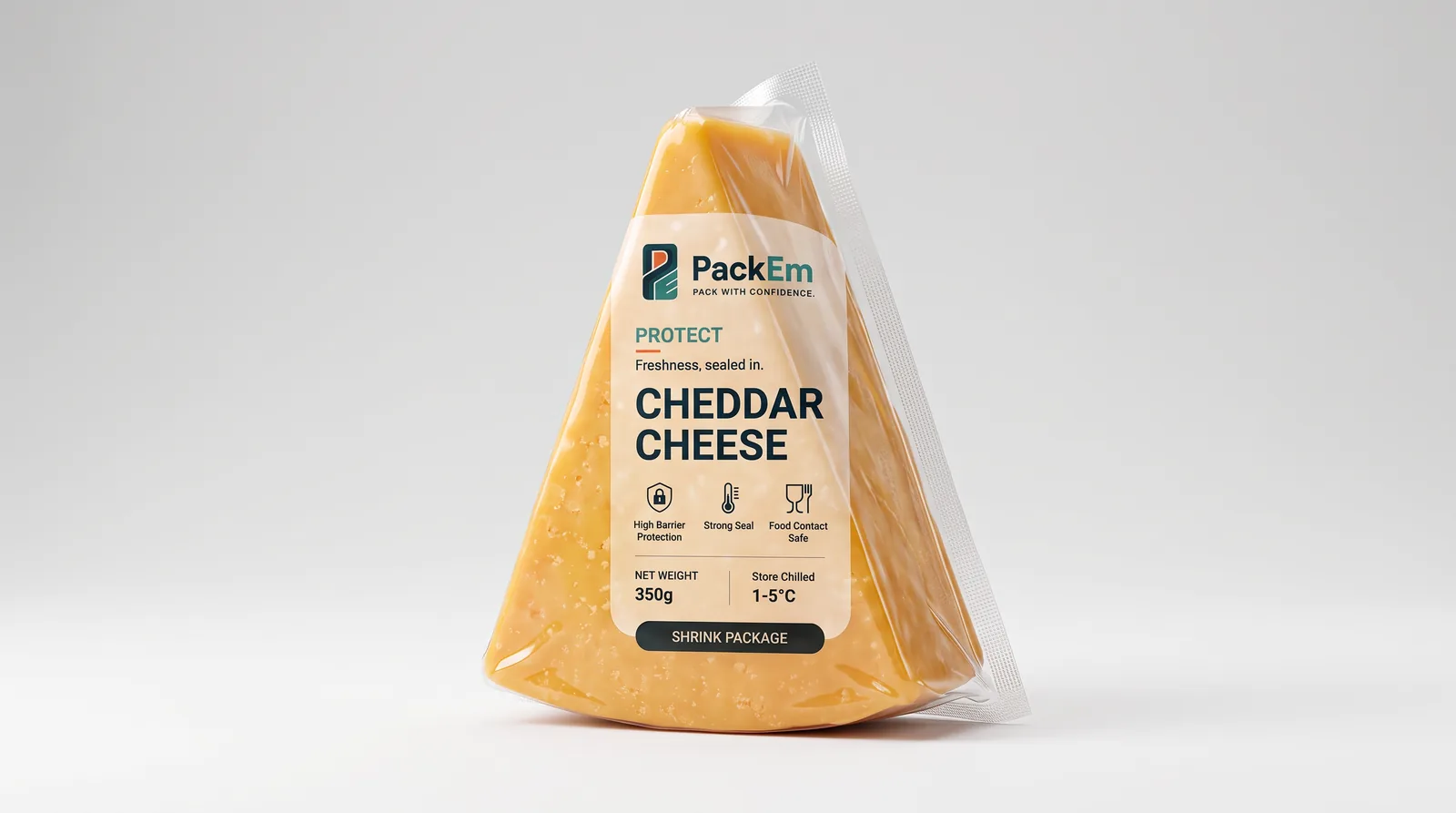
When a PA/PE bag is not enough, the next step is a dedicated barrier layer. In flexible packaging that almost always means EVOH or PVDC. Both cut oxygen to a fraction of what nylon allows, but they behave differently, and the choice affects cost, appearance and how the pack performs in a humid supply chain.
What EVOH is
EVOH, ethylene vinyl alcohol, is a very strong oxygen barrier when dry. A thin layer, often just a few microns, buried between PE or PA layers can bring the OTR of a shrink bag below 10 cc/m²/day. It is clear, has no smell and is widely used in shrink bags, thermoforming films and lidding.
Its weakness is water. EVOH absorbs moisture, and as it does, its barrier drops. That is why it is never used on the outside of a structure. It always sits in the middle, protected by PE layers that keep moisture away.
What PVDC is
PVDC, polyvinylidene chloride, is a barrier against both oxygen and moisture, and it holds its performance in humid conditions much better than EVOH. It has been used in meat and cheese shrink bags for decades. It can be coextruded as a layer or applied as a coating on PET or OPP.
Its drawbacks are a slight yellow tint in thicker layers, a higher price in some markets and, because it contains chlorine, more limited recycling options. Some retailers and export markets now prefer chlorine-free structures, so check before you choose.
Side by side
Dry oxygen barrier: EVOH is usually stronger. Barrier at high humidity: PVDC holds up better. Moisture barrier: PVDC is better, EVOH adds little. Clarity: EVOH is clearer. Recycling: EVOH structures are easier. Price: it depends on the structure and the market, so compare actual quotes rather than rules of thumb.
Which one for your product
For chilled fresh meat and poultry in a cold chain that stays cold and fairly dry, EVOH shrink bags are the common choice in Indonesia today. For cheese that ripens in the bag, or products that sit in humid storage, PVDC can give steadier results. For retort or hot fill work, the structure needs to be designed around the process and both options need testing.
Think about the whole route, not just the cold room. A pack that leaves Jakarta chilled but waits on a dock in Makassar or Medan sees heat and humidity that a lab test does not.
A note on labelling
Some buyers ask for the barrier material to be named on the pack or the spec sheet. Keep the structure written down for each product so your QC team and your customers can trace exactly what was used.
How to decide
Tell your supplier the product, the target shelf life, the storage temperature and where it travels. Ask for OTR at both dry and humid conditions. Then run a trial with both structures on a small batch and check colour, smell and leakers at the end of the shelf life you need. PackEm can supply EVOH and PVDC options in matching sizes so the comparison is fair.